
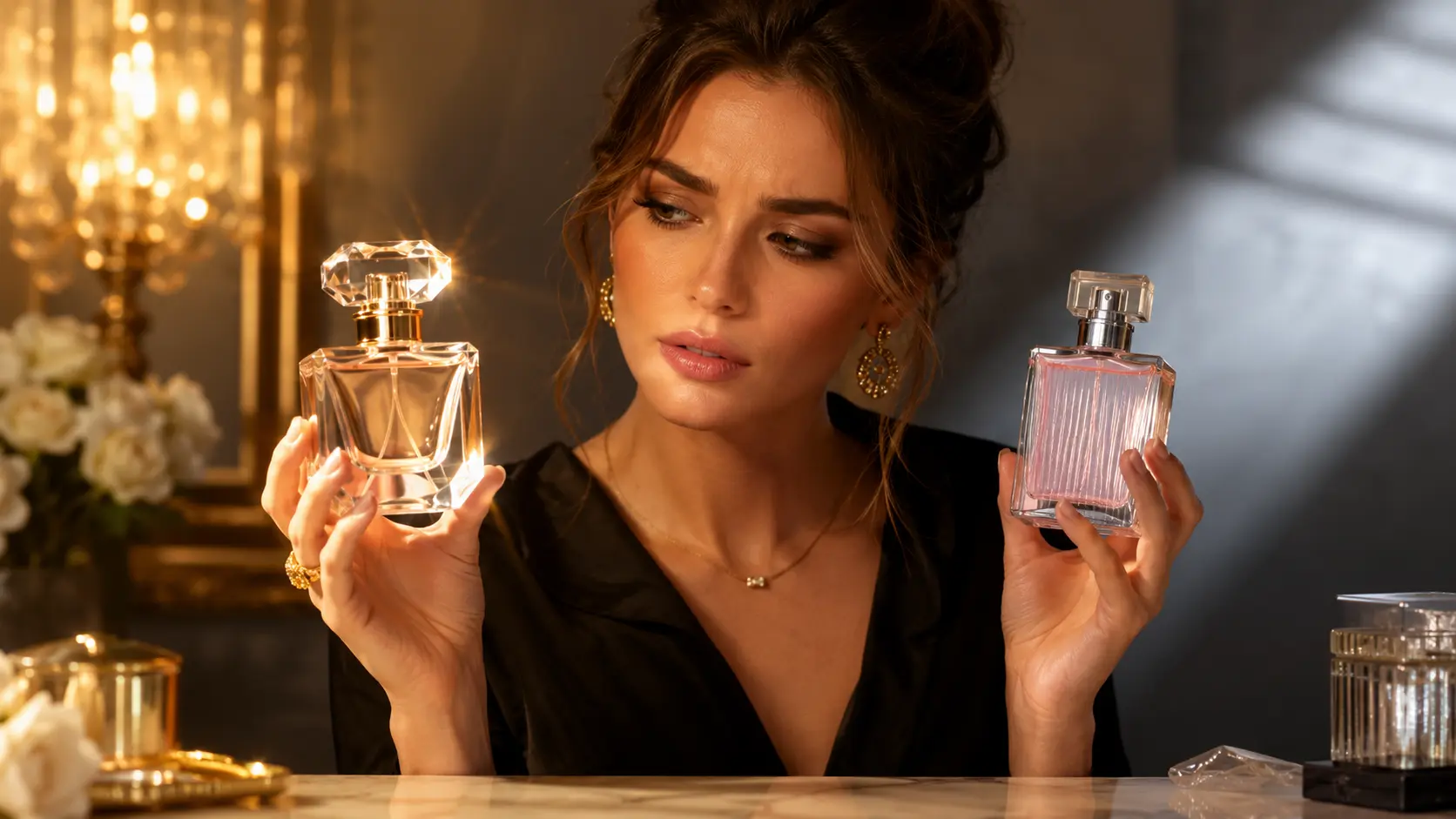
Expensive Perfume or a Cheap Fake: Can People Really Tell?
Perfume is part craft, part chemistry and part perception. When you sniff a scent that costs hundreds, it’s natural to wonder whether the price reflects a real difference—or if a cheap counterfeit could fool you.
This guide breaks down the practical signs that separate authentic, quality fragrances from cheap fakes and offers clear steps to test, buy and travel with scents without wasting money.
Why price doesn’t always equal superior scent
High price tags reflect several factors beyond raw scent quality: marketing, packaging, brand heritage, limited batches, and the use of rare materials. But many well-made, honest fragrances fall in the mid-range and can smell excellent without a luxury markup. If you’re comparing options, sampling is more revealing than price alone—especially when evaluating a designer women’s perfume next to a niche counterpart.
How fragrances are structured (and what fakes usually miss)
Perfumes are built in layers: top notes (initial impression), heart notes (core identity), and base notes (longevity and depth). Counterfeits often try to mimic top notes but shortcut chemistry on the heart and base—resulting in a burst of similarity that evaporates quickly or turns chemically. Understanding these layers helps you judge a perfume beyond the first 30 seconds.
Common differences between genuine luxury and fake bottles
Authentic luxury releases pay attention to ingredient sourcing, balanced formulation and consistent aging. Fake or cheap copies typically cut costs by using synthetic accords that mimic a signature note but lack complexity and roundness. When testing, look for richness and transitions: a true luxury women’s perfume will evolve across the three stages; a fake often collapses after the initial spray.
Smell test: practical sniffing steps anyone can use
Do this controlled test to evaluate authenticity and quality:
- Start with clean skin and no other competing scents.
- Spray once on the wrist or a testing blotter. Wait 30 seconds—assess the top note.
- Check again at 5–10 minutes for the heart note and at 30–60 minutes for the base. Genuine formulations reveal complexity over time.
- Compare side-by-side with a known genuine fragrance if possible. Designer standards give useful reference points; consider trying a designer men’s cologne to train your nose on balanced constructs.
Longevity and sillage: measurable cues, not subjective bragging
Longevity (how long a scent lasts) and sillage (how it projects) are often the clearest real-world signs of a high-quality perfume. Cheap imitations may smell close initially but fade fast or become weakly persistent. High-concentration formulations and quality base notes deliver steadier performance. If you’re testing a scent on a shopping day, try a light activity—walk a few aisles or step outside—and note whether the scent remains identifiable after an hour. For men seeking stronger endurance, samples of luxury men’s cologne provide good benchmarks of true longevity.
Packaging and bottle cues that reveal authenticity
Packaging is not merely aesthetic—brands invest heavily in consistent packaging, serial codes, and secure seals. Signs of a fake include misspelled text, cheap plastic parts, uneven printing, or poorly seated caps. Gift and sample sets are often produced to the same quality standards as full bottles; if you’re unsure about a seller, picking up a women’s perfume gift set or a reputable mini set gives you reassurance about origin and packaging quality.
Buying tips and trusted sources
Where and how you buy matters more than hoping for luck. Avoid street vendors and sketchy online listings with prices that seem too good to be true. Use these practical tips:
- Buy from authorized retailers, department stores, or verified brand sites.
- Request samples or test sprays before committing to a full bottle.
- For travel and testing, consider buying travel-sized legitimate products or decanting—try real travel options like the travel size women’s perfume and travel size men’s cologne lines to compare scents on the go.
- If you prefer decants, a reliable refillable atomizer helps you carry small amounts without opening the original bottle—consider a tested product like the 8ML Perfume Travel Refillable Porta… for safe transfers and trials.
Checklist: quick tests before you buy
- Compare scent evolution at 30 seconds, 10 minutes and 1 hour.
- Inspect label spelling, batch code, and box quality.
- Smell for flat synthetic aldehydes or chemical off-notes after the top fades.
- Check longevity and whether the base notes are present.
- Buy from authorized sellers or known sample sources when possible.
FAQ
- Q: Can a fake ever smell identical to the original?
A: Short-term top-note mimicry is possible, but long-term evolution, depth and base notes rarely match an authentic, well-formulated perfume. - Q: Is a cheaper “inspired by” perfume the same as a fake?
A: “Inspired by” fragrances legally emulate a scent profile without copying proprietary formulas; they’re not illegal fakes but may differ in quality and longevity. - Q: How long should an authentic perfume last on skin?
A: It depends on concentration and ingredients—eau de parfum typically lasts 4–8 hours on skin, while some luxury EDPs and parfums can last longer. - Q: Are travel and mini sets useful for testing authenticity?
A: Yes—official travel and mini sets let you test a scent’s behavior without investing in a full bottle; look for reliable mini collections like a mini perfume gift set. - Q: What immediate red flags indicate a fake bottle?
A: Misspellings, absence of a batch code, cheap cap fit, strange color of juice, and overly glossy or generic packaging are common warnings.
Conclusion
People can often tell the difference between a high-quality perfume and a cheap fake when they test beyond the initial spray, inspect packaging, and compare longevity and evolution. Use structured sniff tests, buy from trusted sources, and use travel sizes or refillable atomizers to trial scents without large purchases. Practical checks matter more than the price tag—arm yourself with these steps and you’ll spend your money on fragrances that truly deliver.
Products Featured in This Article
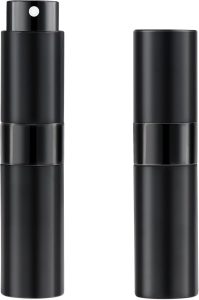
8ML Perfume Travel Refillable Porta…
Travel size toiletries,perfume travel refillable,travel essentials for women,vacation essentials,travel perfume bottle refillable,tiktok trend items,purse essentials,travel essentials…
