
Why the Same Perfume Smells Different on Different People
Have you ever sprayed a perfume on a tester strip and loved it, then it smelled completely different on your skin? You’re not imagining it. Perfume interacts with a lot of personal and environmental factors, and those interactions change how notes develop, how long they last, and even what you perceive.
This guide explains the main reasons a fragrance can smell unique on different people and gives practical steps for testing, choosing, and getting consistent results from your scents.
Skin chemistry and pH
Each person’s skin has a slightly different chemistry — a mix of natural oils, sweat, pH level and microflora. Those variables alter how fragrance molecules break down and evaporate. For example, warm, acidic skin may amplify bright top notes while drier, neutral skin can let rich base notes linger. If a perfume highlights animalic, anchor-like bases on you, try sampling similar scents in the Musk Perfume category to see how those base notes behave on your skin.
Moisturizers, oils and skin condition
What you put on your skin before spraying matters. Lotions, body oils and even suntan products create a layer that can trap or diffuse fragrance molecules. Oily skin tends to hold scent longer; very dry skin may make a perfume fade faster or make it smell sharper. If you like sweeter, creamier ends of a perfume, look at formulations with gourmand notes like those in the Vanilla Perfume collection and test them on moisturized and non‑moisturized skin to compare.
Temperature, humidity and season
Heat speeds up evaporation. On a hot day or in a humid climate, volatile citrus and green notes release quickly and can dominate a scent’s personality, while in cold, dry weather heavier base notes like woods and resins are more noticeable. If you prefer light, crisp profiles year-round, consider exploring the Unisex Fresh Fragrance selections, since those are formulated to perform well in warmer conditions.
Application method and fragrance concentration
How and where you apply a perfume changes its projection and longevity. Spraying on pulse points (wrists, neck, chest) will warm the scent and increase projection; spraying clothing versus skin can make a perfume last differently. Concentration types — parfum, eau de parfum, eau de toilette, cologne — also play a role. If you want a reliable daily option with balanced projection, test options in the Men’s Everyday Cologne category (or their unisex equivalents) to find a concentration that suits your routine.
Fragrance composition: notes and accords
Perfumes are layered: top notes (first impression), middle notes (heart), and base notes (long-lasting foundation). Different ingredients react differently with skin. Woody notes may come forward on one person while citrus or floral facets dominate on another. If woods tend to be the backbone that works for you, compare similar blends in the Unisex Woody Fragrance range to see which accords complement your skin’s chemistry best.
Diet, medication and hormones
Biological factors change scent perception. What you eat (spicy food, garlic, heavy dairy), certain medications, and hormonal shifts (menstrual cycle, pregnancy) can subtly change body odor and how a perfume smells on you. These effects are temporary; if a fragrance suddenly seems off, give it time or retest under different circumstances before deciding it doesn’t work.
How to test perfumes properly
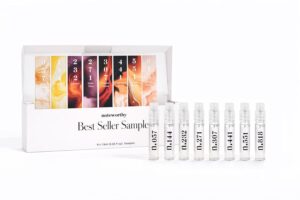
Many scent mismatches come from poor testing habits. Avoid over-spraying in the store or testing multiple heavy fragrances back-to-back; your nose fatigues. When you try a perfume, spray it once on your wrist or inner elbow, let it rest 10–30 minutes, and evaluate at different stages. To sample multiple perfumes at home without committing to full bottles, try a kit like the Noteworthy Fragrance Sampler Set.
Travel, climate and on-the-go testing
Trying fragrances on holiday or in different climates can show you new facets of a scent. Travel sizes and decants let you test a perfume across environments without committing to a full bottle. If you often switch climates, keep a Travel Perfume Gift Set or small bottles for reliable on-the-go choices.
Storage, age and bottle formulation
Perfume degrades if exposed to heat, light or air. An older bottle or one stored on a sunny shelf may smell flattened or “off” compared with a fresh one. Even batches of the same perfume can vary slightly by production run. If a fragrance changes on you unexpectedly, confirm the bottle’s storage history or try a fresh bottle and compare. Bright citruses can dull over time, so if you favor citrus profiles, explore the Unisex Citrus Fragrance section to find fresh, well-formulated options.
Checklist: quick steps to get consistent results
- Test a perfume on clean skin — avoid lotion or perfume layering during the test.
- Wait 10–30 minutes to evaluate top, heart and base notes.
- Try a fragrance in different temperatures if possible.
- Use sampler sets or travel sizes before buying full bottles.
- Store bottles in a cool, dark place to preserve the formula.
FAQ
Q: Why do I love a scent on a friend but not on myself?
A: Differences in skin oils, pH and even diet change how notes develop. What reads as warm and powdery on one person might smell sweeter or muskier on another.
Q: Can I make a perfume last longer on my skin?
A: Yes — apply to moisturized skin, use a fragrance primer or matching body lotion, and target pulse points. Layering with unscented or matching products helps longevity.
Q: Are cheaper perfumes more likely to smell different on me?
A: Not necessarily. Cost affects ingredients and concentration, but even high‑end perfumes will vary by skin chemistry. Sampling is the best way to know.
Q: How many perfumes should I test before deciding?
A: Limit to a few at a time to avoid olfactory fatigue. Use a sampler kit to test more options at home over several days.
Q: Does perfume concentration matter for how it smells?
A: Yes. Parfums and EDPs have higher oil concentrations and often reveal deeper base notes; EDTs and colognes are lighter and may emphasize top notes.
Conclusion
Perfumes react with a complex mix of personal and environmental factors, so it’s normal for the same bottle to smell different on different people. The practical solution: sample thoughtfully (ideally with samplers or travel sizes), test across conditions, and choose scents and concentrations that complement your skin and lifestyle. Small experiments will pay off with a fragrance that feels unmistakably yours.
Products Featured in This Article
Noteworthy Fragrance Sampler Set | …
Product description Add to Cart Add to Cart Add to Cart Add to Cart Add to…
