
Intro
Choosing the right fragrance for the right moment makes a noticeable difference. A light, sweet, or strong scent can complement your mood, the environment, and how you want to be perceived.
This guide breaks down when to wear each type, how to apply them, and simple shopping tips so you smell appropriate and confident every time.
Understand the three basic profiles: light, sweet, strong
Light fragrances are typically airy, citrusy, or aquatic and designed to be understated. Sweet fragrances lean on vanilla, caramel, or gourmand notes that feel cozy and inviting. Strong fragrances include woods, resinous ouds, spices and heavier ambers that project and last longer.
If you want a practical starting point for light, versatile options, check unisex fresh categories like Unisex fresh fragrances for examples of daytime-friendly formulas.
Best times to wear light fragrances
Light scents work best in close quarters and warm weather. Wear them for:
- Daytime office environments where strong projection can be distracting.
- Casual daytime outings—coffee, brunch, errands.
- Hot, humid days when heavy notes can become cloying.
For crisp, energizing options, browse citrus-forward choices like Citrus perfumes—they’re the backbone of most light-fragrance wardrobes.
Best times to wear sweet fragrances
Sweet fragrances are warm and intimate. They’re appropriate for:
- Date nights or social evenings where you want to appear approachable and comforting.
- Fall and winter daytime events when the sweetness feels cozy against cooler air.
- Casual weekend outings when a playful, gourmand note suits the mood.
If you prefer vanilla and creamy accords, explore options like Vanilla perfumes for reliable sweet profiles.
Best times to wear strong fragrances
Strong fragrances have more sillage and longevity. They excel at:
- Evening events—dinners, clubs, formal gatherings—where projection complements dressier attire.
- Cold weather when heavier notes bloom and smell balanced in the air.
- Outdoor night occasions where a powerful scent helps you stand out.
For robust, timeless woods and smoky bases that read strong without being unpleasant, consider Unisex woody fragrances.
Seasonality and context: match scent to temperature and proximity
Temperature affects how a perfume behaves. Heat amplifies volatility—light and citrus notes become louder; dense ambers can become cloying. Cold suppresses volatility—stronger, resinous fragrances show their depth without overwhelming.
Choose florals and lighter bouquets for spring and early summer events; florals are versatile for daytime and formal daytime settings, see Floral perfumes for options that bridge casual and dressy looks.
Concentration and layering: control intensity without overapplying
Concentration (EDT vs EDP vs extrait) and layering determine how a scent performs. Pick lower concentrations for close-contact settings and higher for long evenings out.
Buying sets or minis helps you test concentration without committing to a full bottle—consider curated choices like Designer perfume sets to sample different strengths responsibly.
Application and practical tips (where, how much, and travel options)
Apply to pulse points (wrists, inner elbows, chest) for balanced diffusion. For light fragrances one to two spritzes are usually enough; for strong fragrances one to three depending on concentration. Avoid rubbing wrists together—it crushes the top notes.
For commuting and travel, carry compact options to refresh without overdoing it—look into Pocket-size perfumes so you can adapt during the day.
Try-before-you-commit: sampler strategies
Buying a full bottle based on an online description can backfire. Use samples to test how a scent interacts with your skin chemistry over several hours.
Sampler kits and curated sample sets make experimentation economical—consider a reputable sampler like the Noteworthy Fragrance Sampler Set if you want guided variety before buying a full bottle.
Checklist: Quick decision guide
- Daytime + close quarters = light/citrus (1–2 spritz).
- Date night or cozy vibe = sweet/vanilla (1–2 spritz, consider a warmer concentration).
- Evening events or cold weather = strong/woody/oud (1–3 spritz, higher concentration ok).
- Unsure? Sample or buy a mini/set before committing.
- Carry a pocket-size or roll-on for midday touch-ups.
FAQ
Q: Can I wear sweet fragrances to work?
A: Yes—choose lighter concentrations and apply sparingly; avoid heavy gourmands in small, enclosed offices.
Q: How do I know if a scent is too strong for a setting?
A: If people step back or you notice scent lingering on clothes long after leaving, dial back the amount or switch to a lighter concentration.
Q: Should men and women follow different rules?
A: Not necessarily—match the scent’s profile to time, weather, and proximity. Many options are unisex and work across genders.
Q: How long should I test a fragrance before deciding?
A: Wear a sample for a full day if possible—top, heart, and base notes reveal themselves over hours.
Q: Any travel-friendly recommendations?
A: Use pocket-size sprays, roll-ons, or minis to carry multiple options without risk of leaking or overpacking.
Conclusion
Match fragrance family to time, weather, and social context: light for daytime and heat, sweet for intimate and cozy moments, strong for evenings and cold. Start small, test samples, and adjust application to suit the setting—then you’ll always arrive smelling intentional, not accidental.
Products Featured in This Article
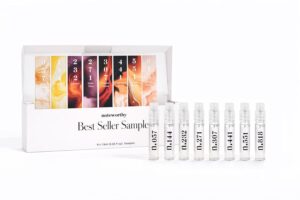
Noteworthy Fragrance Sampler Set | …
Product description Add to Cart Add to Cart Add to Cart Add to Cart Add to…
